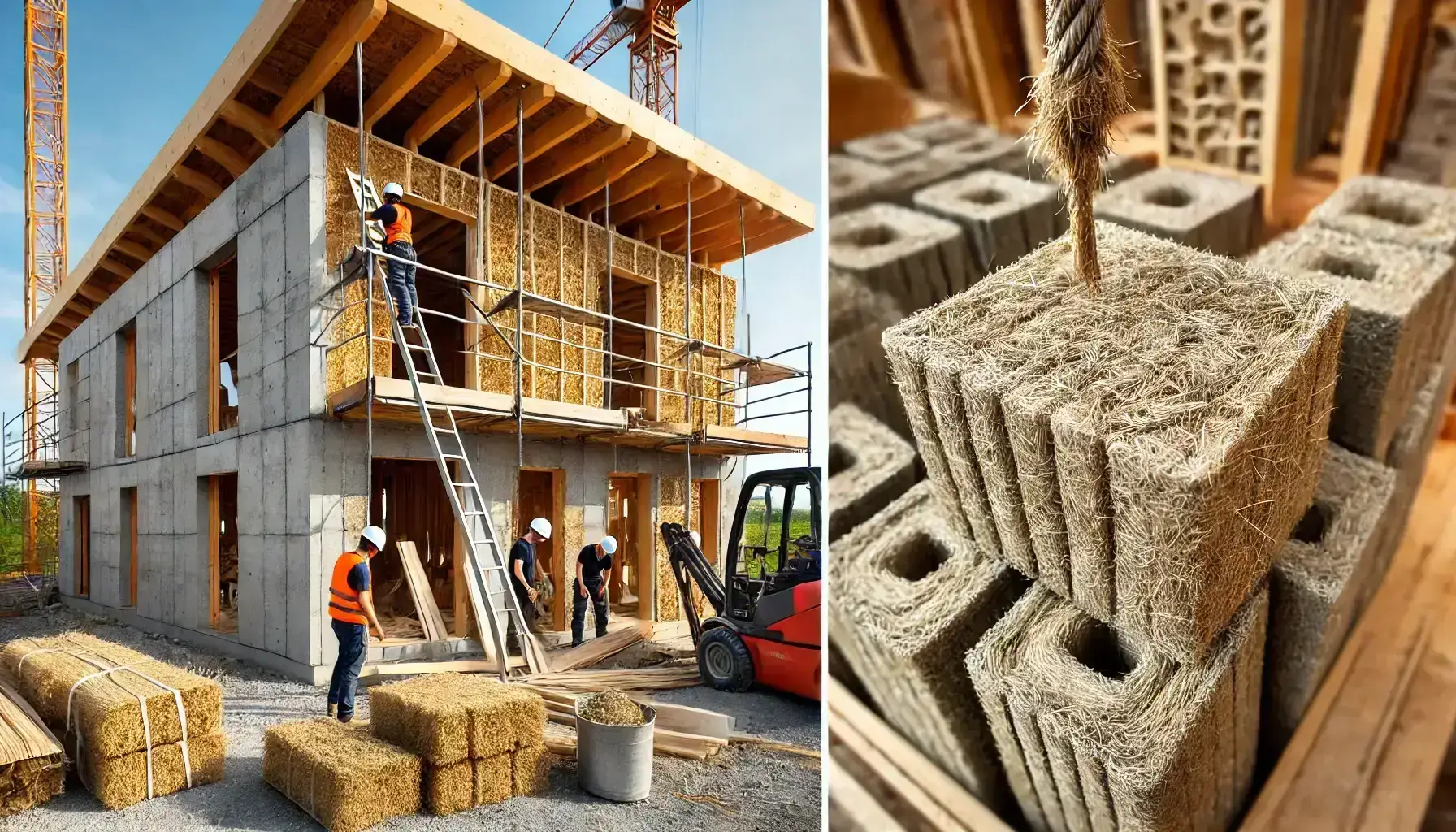
Hemp, a plant with countless properties known for millennia, has a technical history dating back over 8,000 years ago in the regions of Central Asia. The first documented uses date back to 2737 BC, when a Chinese medical treatise indicated it as a medicinal plant. However, its extraordinary fibrous properties have been exploited for centuries in multiple sectors, from the construction of Columbus’s caravels to the ultra-resistant sails of the English Navy.
Today, hemp plays an important role in sustainable construction, countering the massive use of harmful materials. In the context of the Green Deal, hemp emerges as a protagonist, offering eco-friendly solutions to address climate change and indiscriminate exploitation of resources.
In construction, hemp lends itself to various applications, including blocks, plasters and insulating panels. Its ability to absorb heavy metals from soil, known as “Bioremediation”, is particularly relevant, as demonstrated in the attempt to remediate the soils of Ilva in Taranto.
Materials derived from hemp, such as bio-bricks, stand out for their complete recyclability and biodegradability, supporting the adoption of a circular economy. Such materials can be reused or transformed into new products, contributing to environmental well-being.
The hemp bio-brick, made with the chopped stem of the plant, agglomerated with dolomitic lime and water, not only has the ability to absorb CO2 from the atmosphere, but also offers high insulating capacity. Houses with hemp bio-brick walls regulate internal humidity, improving living comfort and the healthiness of environments.
Despite the numerous advantages, it is important to consider some negative aspects, such as the bulky dimensions of hemp bricks and the limited availability of hemp hurds in Italy, often imported from France.
Sound-absorbing hemp panels, ideal for wood prefabrication, offer additional options for thermal insulation, while the mixture of lime and hemp can be used as internal and external plaster, ensuring breathability and moisture resistance.
In terms of costs, the use of hemp in bio-construction can be higher compared to traditional construction, mainly due to the limited spread of the supply chain in Italy and the limited presence of distributor companies. However, the market seems to be evolving, and the hope is that greater diffusion will help stabilize prices in the future. Some regions, such as Piedmont, offer incentives and tax deductions for the use of bio-derived or recycled materials, as provided by regional law of October 4, 2018, no. 16.